


THE NEXUS REPORT | 17 NOVEMBER 2026
WARSAW, Poland — Poland's central bank has suspended all payment transactions involving the bank accounts of the country's Constitutional Tribunal, escalating an ongoing institutional dispute over who has the legal authority to lead the court and control its finances.
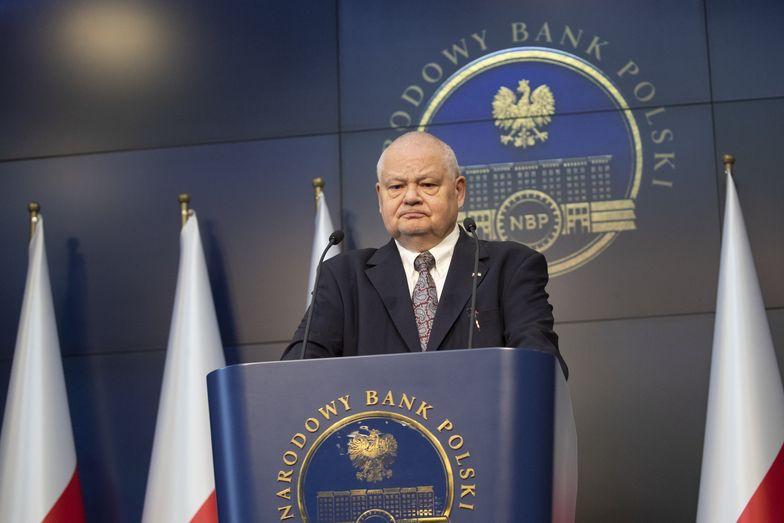
The National Bank of Poland (NBP) announced the suspension on Monday, November 16, explaining that it had received conflicting documents identifying different individuals as authorised to manage the Tribunal's bank accounts.
NBP spokesperson Maciej Antes confirmed that the decision applies to all payment orders involving the Tribunal's funds, regardless of who submits them.
According to the central bank, the conflicting documentation created legal uncertainty over who was authorised to represent the institution and approve financial transactions. The NBP stressed that it was not responsible for resolving the wider leadership dispute.
The disagreement involves Constitutional Tribunal President Bogdan Święczkowski and Judge Anna Korwin-Piotrowska, who has assumed responsibility for directing the Tribunal's work amid the confrontation.
Święczkowski submitted documentation to the central bank on November 2 and reaffirmed his position on November 12, citing a Supreme Court ruling issued on November 10 that overturned orders suspending him and his deputy, Bartłomiej Sochański.
However, Korwin-Piotrowska had also submitted competing documentation on November 6, creating conflicting claims over who could authorise payments from the institution's accounts.
The financial suspension has already begun affecting the Tribunal's operations. Korwin-Piotrowska confirmed that the institution was unable to pay employees and external service providers, with some invoices reportedly overdue.
The decision has prompted criticism from Poland's government. Finance and Economy Minister Andrzej Domański accused the central bank of becoming involved in a political dispute, arguing that its primary responsibility should be monetary policy rather than political affairs.
Justice Minister and Prosecutor General Waldemar Żurek also criticised the move, describing it as a threat to the functioning of the Tribunal. Government officials have indicated that alternative arrangements may be considered to ensure the institution can continue operating.
The dispute forms part of a broader confrontation involving Prime Minister Donald Tusk's government, President Karol Nawrocki and the opposition Law and Justice (PiS) party.
At the centre of the crisis are disagreements over judicial appointments, the recognition of newly appointed judges and the authority to manage the Constitutional Tribunal.
The Tribunal plays a significant role in Poland's legal system, ruling on whether legislation complies with the country's Constitution. Its prolonged institutional paralysis therefore raises concerns about judicial independence, constitutional authority and the separation of powers.
As of November 17, the central bank's payment suspension remains in place, with no publicly confirmed resolution to the competing claims over control of the Tribunal's finances.
The developments represent another escalation in Poland's ongoing constitutional dispute, as political and judicial institutions remain divided over the legitimacy of the Tribunal's leadership.

Comments (0)
No comments yet. Be the first to share your thoughts!